If you are thinking about buying a lakefront penthouse on Toronto’s waterfront, you already know the view is only part of the story. One building can feel like a front-row seat to the city, while another offers a quieter, more park-oriented experience just a short distance away. This guide will help you compare waterfront submarkets, understand the condo details that matter, and focus on what actually shapes daily life in a top-floor residence. Let’s dive in.
Toronto waterfront areas feel different
Toronto’s waterfront is not one uniform neighbourhood. The City includes the waterfront within its Green Space System from Marie Curtis Park to Rouge Beach Park, while Waterfront Toronto’s revitalization area spans 800 hectares from Dowling Avenue to Coxwell Avenue. For you as a penthouse buyer, that means the experience can shift quickly depending on the exact stretch of shoreline and building position.
Central waterfront living
The central waterfront is the most built-out downtown section. Waterfront Toronto describes this area as a 2.5-kilometre stretch where Queens Quay West has been reshaped with a tree-lined promenade, cycling links, a continuous boardwalk, and finger piers.
This part of the waterfront offers strong city energy and direct access to major public spaces. Harbourfront Centre alone draws more than 12 million visitors a year, so a penthouse here may deliver excitement, convenience, and iconic views, but often with less day-to-day privacy than a quieter stretch.
East Bayfront and Quayside
East Bayfront, Quayside, and the nearby Port Lands offer a more emerging waterfront setting. Quayside is planned as a 4.9-hectare mixed-use complete community with homes, parks, retail, childcare, and infrastructure.
This eastern area can appeal if you want a newer waterfront identity with more change still ahead. The City, TTC, and Waterfront Toronto are also advancing Waterfront East transit from Union Station along Queens Quay East toward Cherry Street and future waterfront lands, which makes connectivity an important part of the long-term value discussion.
Western waterfront stretches
The western waterfront tends to feel more recreational. Mimico Waterfront Park added 1.1 kilometres of shoreline park space in an area that historically had limited public access, and the Western Beaches plan focuses on water access, continuous paths, beaches, and multi-season use.
If your ideal penthouse lifestyle includes shoreline openness, walking paths, and outdoor activity, this rhythm may feel very different from the downtown core. It can offer a more relaxed pace without losing the defining lakefront setting.
Penthouse features that matter most
A lakefront penthouse should be evaluated differently from a standard downtown condo. On the waterfront, outlook, outdoor space, and exposure can have a bigger impact on your lifestyle than square footage alone.
Exposure shapes the view
Not every lake view is equal. Waterfront Toronto’s public spaces, including Canada Square and the WaveDecks, are designed to frame both skyline and lake views, which highlights how much orientation matters.
A south-facing suite may give you a broad water outlook, while a southeast or southwest exposure can change the balance of light, skyline presence, and neighbouring building mass. A corner penthouse may offer a more layered composition, but you still need to assess what actually sits in front of you, not just what the listing calls a lake view.
Outdoor space needs close review
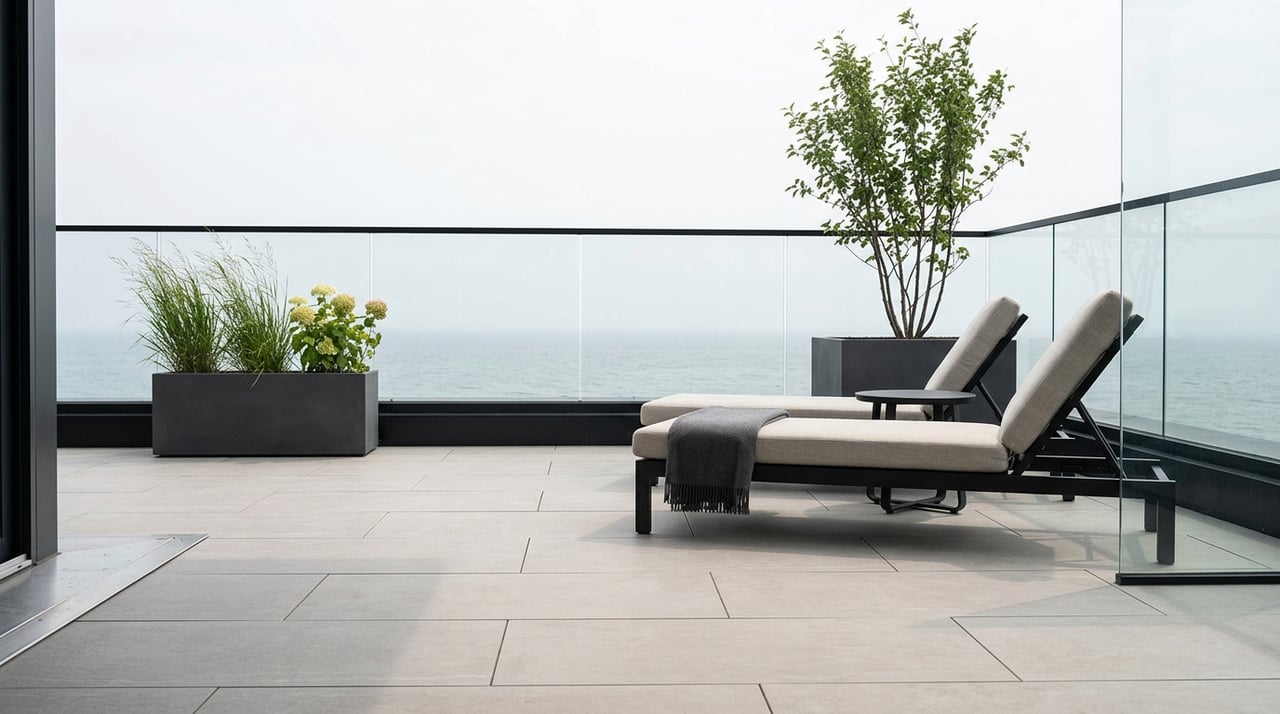
Terraces and balconies are often a major reason buyers pursue penthouses on the waterfront. But in Ontario condos, balconies are commonly exclusive-use common elements, which means the condo corporation owns them even though you have exclusive use.
According to the Condominium Authority of Ontario, most changes to these spaces require board approval under the Condo Act. That makes terrace size, wind protection, privacy screening, and building rules much more important than they may first appear.
Weather affects daily use
Lakefront living has a real seasonal dimension. The City of Toronto notes that conditions along Lake Ontario can be unpredictable, including high waves, off-shore winds, fog, and rip currents, and beach supervision and maintenance are generally daily from June to September.
For penthouse buyers, the takeaway is simple: outdoor living can be exceptional in warm weather, but the waterfront usually feels more exposed in cooler months and winter. A beautiful terrace is most valuable when it is also usable and protected.
Privacy versus waterfront energy
One of the biggest differences between waterfront penthouses is how closely they connect to the public realm below. Some buyers want to feel part of the city’s waterfront energy. Others want visual drama without constant activity outside their windows.
Active promenades and marinas
Some buildings are located beside highly active public destinations, promenades, and boating nodes. Waterfront Toronto’s work along the harbour is designed to improve access by both water and land, and City listings show active yacht clubs and boating activity around areas such as Cherry Beach, the Toronto Islands, and Ashbridges Bay.
That can add interest, movement, and a strong sense of place. It can also mean more seasonal traffic, more public visibility, and a livelier setting than you may want if privacy is high on your list.
Urban vibrancy has tradeoffs
On the central waterfront, public animation is part of the appeal. Restaurants, cultural venues, promenades, and event spaces can make the address feel exciting and highly connected.
At the same time, a penthouse directly above a busy public edge may not deliver the same sense of retreat as a building set back from the most active waterfront corridors. If discretion matters to you, this is a point worth weighing carefully.
Condo documents matter as much as views
A spectacular penthouse can still be the wrong fit if the building’s finances, rules, or service model do not match your expectations. On Toronto’s waterfront, condo due diligence is just as important as architecture and outlook.
What condo fees really support
The Condominium Authority of Ontario says common expenses fund common elements, reserve fund contributions, cleaning, building maintenance, and condo management services. For a luxury buyer, the question is not only how much the monthly fee is.
The more useful question is whether the fee aligns with the building’s level of service, maintenance standards, and amenity program. A premium fee may be justified in a well-run building, while a lower fee may not tell the full story.
Building rules shape lifestyle
Ontario condo corporations are governed by a declaration, by-laws, and rules. These documents can cover how fees are calculated, who handles repairs and maintenance, and restrictions related to smoking, short-term rentals, pets, and balcony use.
For you, this is where the real character of the building becomes clear. A waterfront penthouse can feel very different depending on whether the building supports quiet owner occupancy, allows more turnover, or applies stricter controls to guests and outdoor use.
Status certificates for resale purchases
If you are buying a resale penthouse, the status certificate is one of the most important documents in the process. The Condominium Authority of Ontario says it includes governing documents, reserve fund information, arrears, special assessments, insurance details, and any outstanding legal issues.
The same source advises buyers to review the certificate with legal counsel. Condo corporations can charge up to $100 including tax and must provide the certificate within 10 days.
Due diligence for pre-construction
Many waterfront buying decisions involve newer or still-evolving communities. If you are considering pre-construction, the Condominium Authority of Ontario recommends researching the builder through the Home Construction Regulatory Authority’s builder registry and reviewing disclosure documents with a lawyer.
This matters because delivery timelines, amenity rollout, and surrounding development can all shape your future experience. On the waterfront, those variables are often more visible than in a fully built-out area.
Waterfront versus traditional downtown living
A lakefront penthouse offers a different lifestyle from a more traditional downtown tower. The value is often not only the prestige of the top floor, but how closely your home connects to open sky, water, and outdoor space.
Shoreline access changes daily life
Toronto’s Martin Goodman Trail spans 22 kilometres along the waterfront from east to west. The City’s Official Plan also describes the waterfront as a place that includes parks, beaches, wetlands, neighbourhoods, and cultural and entertainment destinations.
That means your daily routine may include waterfront walks, cycling, and easier access to public open space than you would find in many inland downtown locations. For many buyers, that is the real luxury.
Transit is strong, but uneven
The waterfront is well connected, but not every address feels equally convenient. The existing streetcar network links the waterfront to Union Station and the lower downtown core, and the Waterfront East LRT project is being advanced as a dedicated route from Union Station along Queens Quay East toward Cherry Street and the eastern waterfront.
Still, it is smart to compare how each address works in real life. If you are used to being steps from dense retail and office corridors, some waterfront pockets may feel more removed than others.
The practical tradeoff
In broad terms, waterfront penthouses often win on views, outdoor potential, and access to parks and water-based recreation. Traditional downtown towers often win on immediate retail concentration and a more constant urban buzz.
The best waterfront penthouses balance these strengths. You want a strong outlook, usable outdoor space, a well-run building, and enough separation from the public realm to make the home feel private.
How to buy smarter on the waterfront
When you compare Toronto lakefront penthouses, focus on a short list of practical questions. These points usually reveal more than finishes or staging ever will.
Use this waterfront penthouse checklist
- What is the exact exposure, and how much water, sky, and neighbouring building mass do you actually see?
- Is the balcony or terrace an exclusive-use common element?
- What do the building rules say about balcony use, pets, smoking, and rentals?
- How active is the promenade, park, or marina below the building?
- What do the condo fees include, and do they match the building’s service level?
- If resale, what does the status certificate reveal about the reserve fund, assessments, and legal issues?
- If pre-construction, what is the builder track record and what amenities or surrounding infrastructure are still phased for future delivery?
Buying a waterfront penthouse is rarely about the view alone. It is about how that view interacts with privacy, weather, building governance, and your daily routine. If you want a more curated, discreet way to evaluate Toronto’s top-floor opportunities, including select private and off-market options, Penthouse Queen offers founder-led guidance tailored to the city’s trophy condo market.
FAQs
What makes Toronto waterfront penthouses different from downtown penthouses?
- Toronto waterfront penthouses often offer stronger lake views, more access to trails and parks, and better outdoor living potential, while traditional downtown penthouses often offer denser retail access and a more constant urban pace.
What should you check about a Toronto penthouse terrace or balcony?
- You should confirm whether the terrace or balcony is an exclusive-use common element, since that can affect what changes you can make and what approvals may be required.
Which Toronto waterfront area feels the most active?
- The central waterfront is generally the most built-out and publicly active stretch, with promenades, cultural destinations, and major visitor activity around Harbourfront.
What documents matter when buying a Toronto resale penthouse?
- For a resale purchase, the status certificate is essential because it includes governing documents, reserve fund information, arrears, special assessments, insurance details, and outstanding legal issues.
Are Toronto waterfront condos well connected to transit?
- Yes, many waterfront condos connect through the existing streetcar network to Union Station and lower downtown, though convenience still varies by exact subarea and building location.
What do Toronto condo fees usually cover?
- Condo fees generally help fund common elements, reserve fund contributions, cleaning, building maintenance, and condo management services.