If you want character and cachet in downtown Toronto, few pockets compete with St. Lawrence. This is one of those rare neighborhoods where former warehouses, Victorian industrial buildings, and polished top-floor residences all sit within easy reach of the market, the Financial District, Union Station, and the waterfront. If you are weighing a heritage hard loft against a modern penthouse, this guide will help you understand what sets each option apart and how to decide which one fits your lifestyle. Let’s dive in.
Why St. Lawrence Stands Out
St. Lawrence is not just another downtown condo district. The area is anchored by the city-owned St. Lawrence Market complex, which includes the North and South Market buildings, St. Lawrence Hall, Market Lane Park, and surrounding pedestrian spaces.
The neighborhood’s identity runs deep. Heritage Toronto notes that the market dates to 1803, making it Toronto’s oldest market, while St. Lawrence Hall dates to 1850 and holds National Historic Site status. That long history still shapes the streetscape today.
What makes the area especially compelling is the mix of old and new. The Old Town Toronto BIA describes a district where heritage buildings and modern condominiums coexist near major downtown destinations. For buyers, that creates a rare luxury proposition: authentic architecture, walkable convenience, and a lifestyle centered on food, culture, and public space.
The Lifestyle Around the Market
For many buyers, the appeal starts outside the home. The South Market houses 65 specialty merchants, and the site also includes the Market Gallery, Market Kitchen, and the Saturday Farmers Market tradition that has operated here since 1803.
The neighborhood also offers a strong cultural layer. TO Live’s presence at Meridian Hall and the St. Lawrence Centre for the Arts adds live performance venues to the area’s daily rhythm. If you want a downtown home where dining, arts, and public spaces are part of everyday life, St. Lawrence delivers that in a very natural way.
It is also a neighborhood that continues to evolve. The North Market reopened in 2025, and the city is improving Market Lane Park as part of the public-realm network. That means you are buying into a district with heritage roots and ongoing momentum.
What Defines a Hard Loft Here
In St. Lawrence, hard lofts are usually adaptive-reuse residences inside older industrial or commercial buildings. The local Heritage Conservation District plan identifies many of the area’s historic building types as commercial warehouses and industrial structures, including notable addresses along Front Street East.
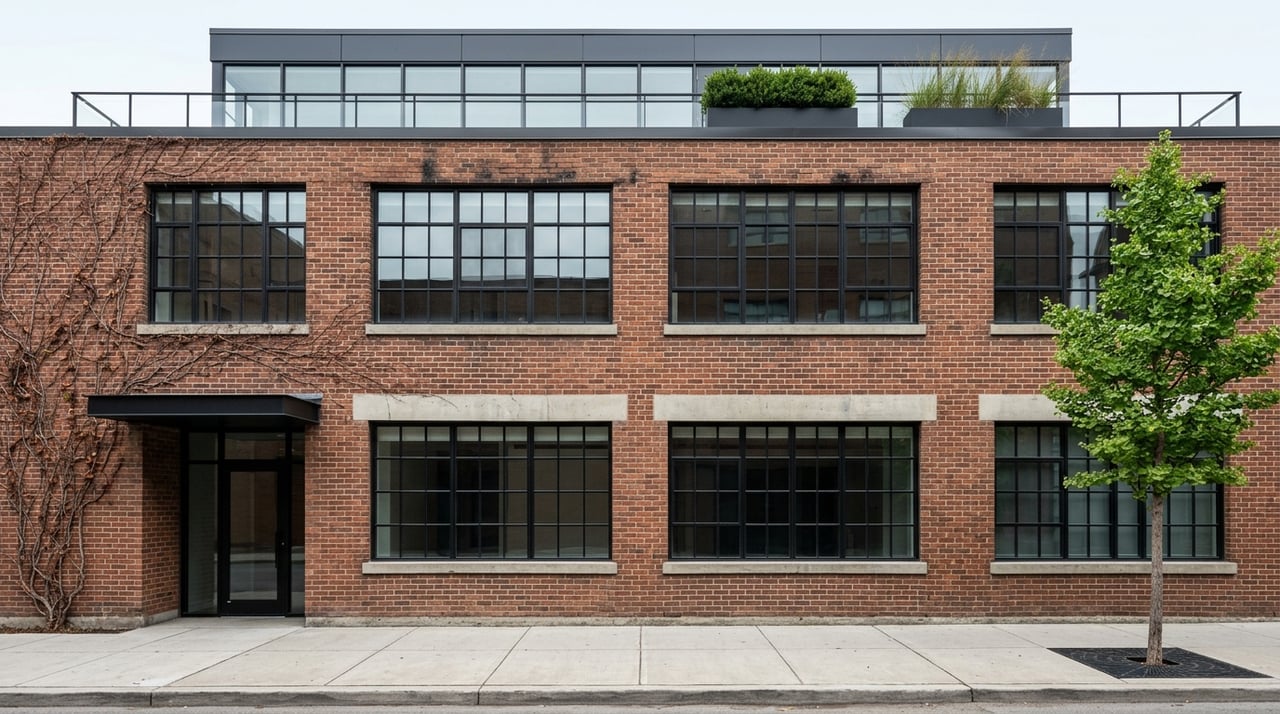
These buildings tend to share a recognizable visual language. Think red or polychrome brick, stone detailing, modest mid-rise heights, glazed storefronts, recessed entrances, and classic warehouse-style facades. When converted into homes, those original bones often become the main attraction.
A good local example is 81A Front Street East, where residential lofts occupy pre-Confederation buildings that once served as warehouse and office space for wholesale grocers. Toronto Life also described a unit there as a brick-lined loft in a 160-year-old former grocery warehouse and candle factory.
Another example is 55 Front Street East, where a two-level conversion in a Victorian factory featured wide rooms spread across two floors and access to a shared rooftop terrace. Nearby, 90 Sherbourne Street helps define the broader hard-loft vocabulary with exposed brick and beams, 10.5-foot ceilings, and warehouse origins dating to 1910.
What Hard Loft Living Feels Like
Hard loft living is usually about texture, history, and individuality. Original materials such as brick, beams, and heavy timber create a sense of place that newer construction often tries to imitate but rarely replicates.
Layouts can feel less standardized than those in a contemporary tower. You may see open plans, unusual room shapes, split-level designs, and spaces that reflect the building’s former industrial use. For many buyers, that uniqueness is exactly the point.
There are tradeoffs, too. Outdoor space is not always guaranteed, and some converted lofts rely on shared rooftop areas rather than private terraces. If your priority is character over polish, however, a hard loft in St. Lawrence can offer a rare kind of downtown ownership experience.
What Defines a Penthouse Here
If hard lofts are about heritage texture, penthouses in and around St. Lawrence are about elevation, light, and refinement. These homes are typically top-floor residences with larger footprints, expansive views, and a more turnkey luxury finish.
A strong example comes from Studio Munge’s two-storey penthouse in the heart of the St. Lawrence Market neighborhood. The residence spans 4,500 square feet and includes 360-degree views, a sprawling terrace, and airy, contemporary interiors.
Another benchmark is the penthouse at Sixty Colborne, described as a three-bedroom, four-bath home occupying half of the 25th floor. With 2,300 square feet, an 800-square-foot terrace, floor-to-ceiling windows, and building amenities such as 24-hour concierge, an exercise room, and a rooftop pool, it shows what many buyers expect from the neighborhood’s top-floor inventory.
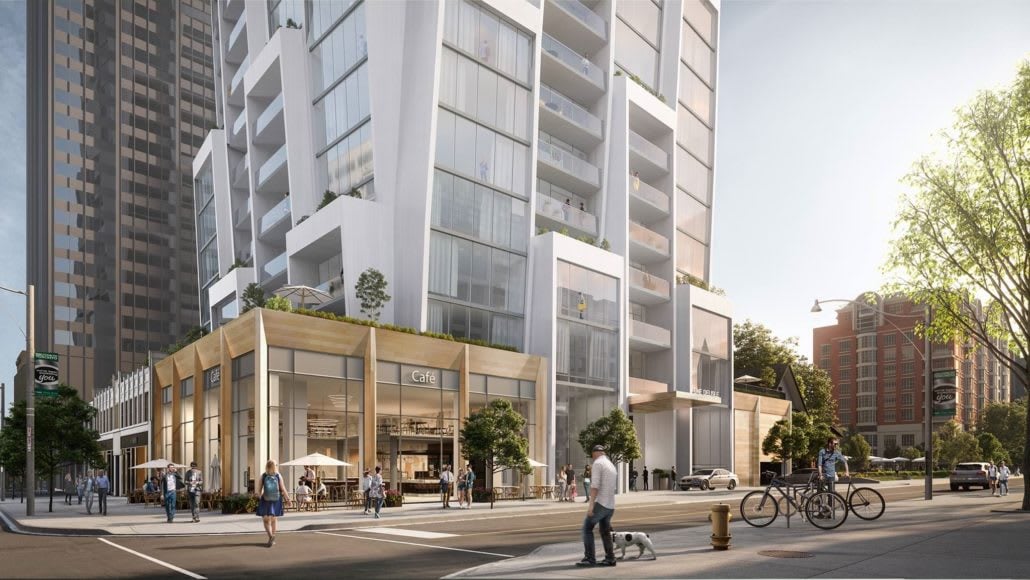
Modern development on the neighborhood’s edge also shapes the luxury standard. Hariri Pontarini’s VÜ blends lofts, townhouses, retail, and condo towers with a masonry podium that references the surrounding industrial context. It is a good example of how newer residential architecture in this pocket often nods to the area’s history while delivering a more current living experience.
What Penthouse Living Feels Like
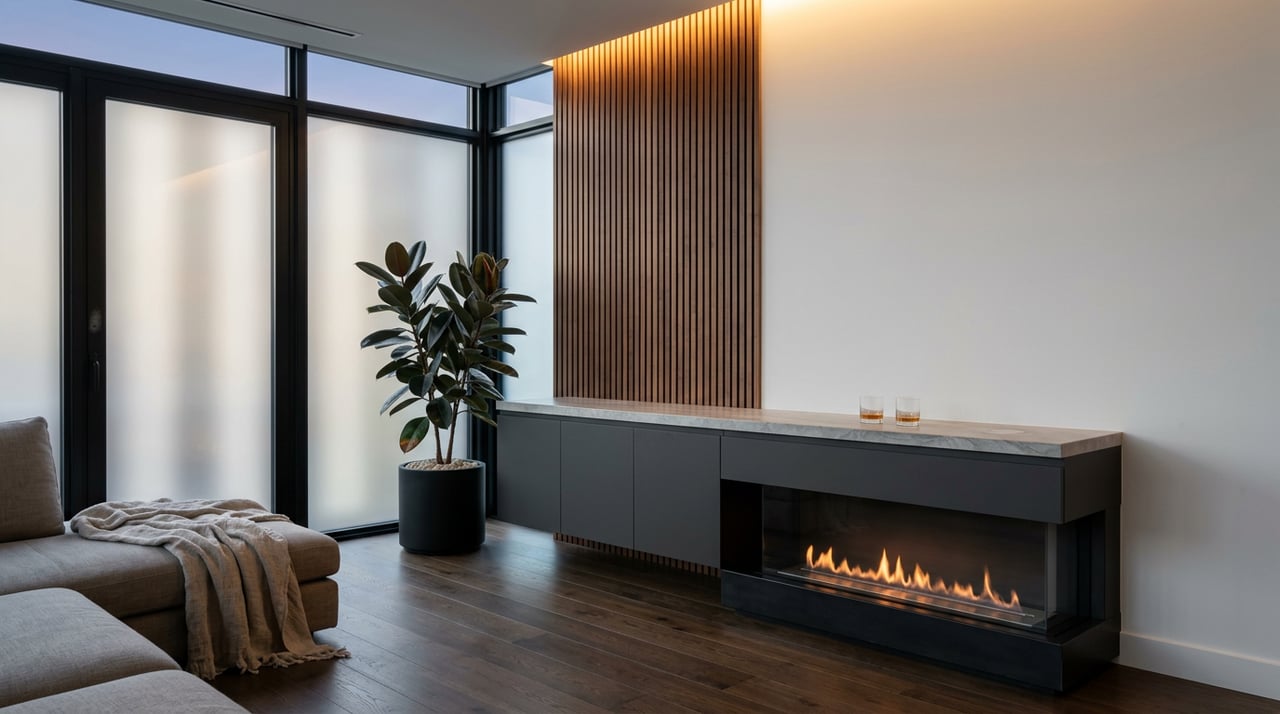
Penthouse living usually prioritizes privacy, scale, and views. Compared with many heritage conversions, these homes are more likely to offer multiple bedrooms, broad entertaining spaces, private outdoor areas, and multiple exposures.
You also tend to get a more amenity-rich building environment. Concierge service, fitness spaces, rooftop features, and newer building systems can matter if you want convenience and a more lock-and-leave lifestyle.
For some buyers, the biggest draw is simplicity. A penthouse can offer dramatic visual impact without the quirks that sometimes come with adaptive-reuse architecture. If your preference leans toward turnkey luxury, this segment often feels like the cleaner fit.
Hard Loft vs. Penthouse
Here is the simplest way to think about the choice in St. Lawrence: hard lofts offer texture and individuality, while penthouses offer polish and presence.
| Feature | Hard Lofts | Penthouses |
|---|---|---|
| Typical setting | Former warehouses or industrial buildings | Top floors of luxury condo buildings |
| Main appeal | Heritage character and original materials | Views, light, scale, and private outdoor space |
| Layout feel | Often irregular or highly unique | Usually more expansive and contemporary |
| Outdoor space | Not always private | More likely to include a private terrace |
| Building experience | Boutique and character-driven | More likely to include concierge and amenities |
Neither option is automatically better. The right fit depends on what matters most in your day-to-day life and how you define luxury.
Which Buyer Fits Each Style
A hard loft may fit you best if you value architecture with history and a home that feels unlike anything else in the building next door. If exposed brick, original beams, and a boutique scale matter more to you than a long amenity list, this category deserves a close look.
A penthouse may be the stronger fit if you want skyline views, private outdoor space, generous square footage, and a more seamless luxury finish. Buyers who entertain often or want a top-floor residence with a concierge lifestyle typically gravitate here.
St. Lawrence is unusual because it offers both paths in one walkable downtown setting. You do not have to choose between neighborhood character and luxury living. In this pocket, the two often coexist.
Why This Pocket Matters for Luxury Buyers
Very few downtown Toronto neighborhoods offer this level of contrast within such a compact area. In St. Lawrence, you can find a compact brick-lined loft in a 19th-century warehouse, a dramatic two-level conversion in a former factory, or a polished penthouse with wraparound views and private terrace space.
That range matters because luxury is personal. Some buyers want a residence that tells a story through materials and history. Others want height, privacy, and a move-in-ready finish that feels effortless from day one.
If you are considering this niche of the Toronto market, it helps to work with a specialist who understands the distinction, the buyer profiles, and the subtleties that drive long-term appeal. To explore penthouses, trophy condominiums, and curated opportunities in downtown Toronto, connect with Penthouse Queen.
FAQs
What is a hard loft in St. Lawrence, Toronto?
- A hard loft in St. Lawrence is typically a residence created through the conversion of a former warehouse, factory, or commercial building, often featuring original brick, beams, and distinctive layouts.
What is a penthouse in the St. Lawrence neighborhood?
- A penthouse in St. Lawrence is generally a top-floor luxury residence designed to emphasize views, larger floor plans, private outdoor space, and a more contemporary building experience.
Do St. Lawrence hard lofts usually have terraces or balconies?
- Not always. Some converted lofts do not have private balconies and may instead offer access to shared rooftop space, while penthouses are more likely to include private terraces.
Are homes around St. Lawrence Market only in heritage buildings?
- No. The area includes both heritage warehouse conversions and modern condominium buildings, which is one of the reasons the neighborhood appeals to a wide range of luxury buyers.
What sizes do St. Lawrence lofts and penthouses come in?
- Local examples range from about 500-square-foot heritage lofts to larger converted suites around 1,700 square feet, as well as penthouses ranging from roughly 2,300 to 4,500 square feet.
Why do buyers choose St. Lawrence over other downtown Toronto areas?
- Many buyers are drawn to St. Lawrence for its combination of historic architecture, access to the market, cultural venues, public spaces, and walkable proximity to the Financial District, Union Station, and the waterfront.