When you are selling a Toronto waterfront penthouse, square footage alone is not what captures attention. Buyers are also responding to the lake, the skyline, the light, and the feeling of living at the edge of the city. In a market where condo buyers have more choice and more room to negotiate, presentation matters even more. The right staging can help your penthouse feel calm, expansive, and unforgettable. Let’s dive in.
Why Waterfront Penthouses Need Different Staging
Toronto’s central waterfront is shaped by a strong public realm, with promenades, parks, and direct access to Lake Ontario. That means a waterfront penthouse is not just being judged as an interior space. It is also being experienced as part of a broader lakefront lifestyle.
This matters because buyers are not only buying finishes and layout. They are buying outlook, natural light, and indoor-outdoor flow. Your staging should support that story from the first photo to the final showing.
TRREB reported that GTA condo sales fell 11.3% year over year in Q1 2026, while active listings remained elevated. Buyers also continued to benefit from substantial choice and negotiating power on price. In that kind of market, a luxury listing needs to look sharper, more intentional, and more emotionally compelling.
Make the View the Hero
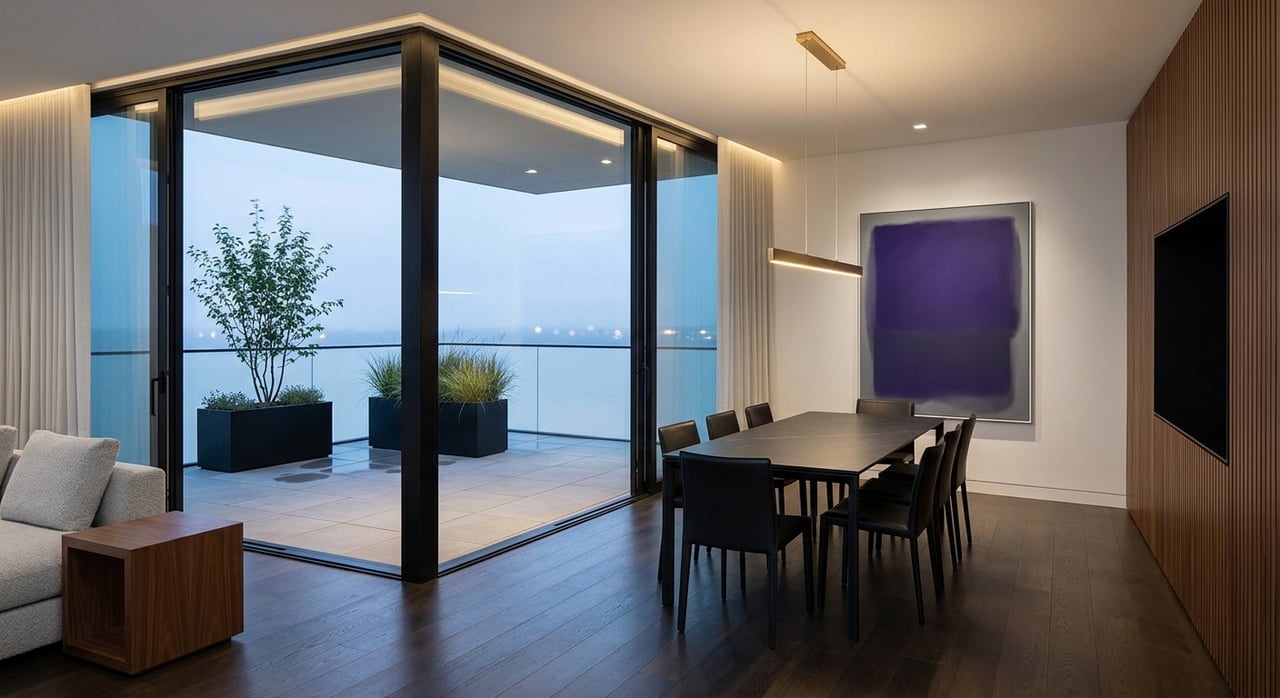
In Toronto waterfront towers, the windows are often the strongest selling feature. Local luxury projects like Aqualuna, Q Tower, and Monde all emphasize floor-to-ceiling glazing, panoramic views, balconies, and abundant natural light. Your staging should make sure those features lead the experience.
That usually starts with furniture placement. Low-profile seating, open-legged tables, and edited accessories help the eye move naturally toward the glass. Tall bookcases, oversized plants, and bulky pieces near the windows can interrupt the very feature buyers came to see.
When someone enters the main living space, the window wall should read first. The furniture should support the room, not dominate it. In a penthouse, restraint usually feels more expensive than excess.
What to avoid near the windows
- Tall furniture that cuts off sightlines
- Heavy clusters of decor on ledges or consoles
- Oversized sectionals that make the room feel dense
- Busy styling that distracts from the water or skyline
Keep Window Treatments Light and Quiet
Window treatments can either enhance a waterfront penthouse or weigh it down. In most cases, simple is better. Lightweight sheers, slim roller shades, or very clean drapery panels tend to preserve the architecture and let the glazing stay front and center.
Heavy drapery, ornate details, and dated valances can visually shrink the windows. In a bright waterfront setting, that can make the entire room feel less open. If privacy or light control is needed, the goal is still to keep the treatment visually quiet.
This is especially important in a penthouse with wide lake exposure or dramatic skyline views. Buyers want to feel that the home is open to the light, not closed off from it.
Use Color That Works With Toronto Light
Bright natural light changes the way color reads. In a waterfront penthouse, direct daylight can make bold colors feel harsher and busy patterns feel louder than expected. That is why calm neutrals often work best.
Soft whites, pale greys, warm taupes, and layered textures create a refined backdrop without competing with the view. This approach also aligns with the design language seen in local luxury waterfront projects like Aqualuna, which leans into light palettes, natural materials, and understated elegance.
The goal is not to make the home bland. It is to make it feel polished, bright, and easy for buyers to imagine as their own. Texture can do a lot of the heavy lifting here through stone, fabric, wood, and subtle contrast.
Best color direction for waterfront staging
- Soft neutrals instead of saturated accent walls
- Textural layers instead of busy patterns
- Pale bedding and simple linens in bedrooms
- A calm, hotel-like palette throughout main spaces
Choose Art and Mirrors Carefully
Mirrors can be useful in a penthouse, but they need a purpose. A well-placed mirror can amplify natural light and make a room feel larger. Too many reflective surfaces, however, can make the space feel restless instead of serene.
The same goes for art. One large, well-scaled piece can look sophisticated and gallery-like. Several smaller pieces or an overly busy gallery wall can compete with the exterior view and make the room feel visually crowded.
In most waterfront penthouses, less is more. The architecture and setting already provide the drama. Staging should edit the room so those built-in strengths stand out.
Focus First on the Most Important Rooms
According to the 2025 NAR staging survey, buyers respond most strongly to the living room, primary bedroom, and kitchen. That tracks closely with how waterfront penthouses are experienced. The view-facing living room usually carries the emotional first impression, while the primary suite reinforces the lifestyle story.
If you are prioritizing your staging budget, start there. Make sure the living room feels open and view-oriented, the primary bedroom feels restful and elevated, and the kitchen feels clean, current, and easy to entertain in.
A dining area can also play an important supporting role, especially in an open-plan penthouse. It helps buyers understand how the space functions without making it feel overfurnished.
Room priority checklist
- Living room
- Primary bedroom
- Kitchen
- Dining area
- Terrace
Stage the Terrace Like an Outdoor Room
On the Toronto waterfront, the terrace is often part of the headline. Many local luxury residences promote private balconies and terraces as core lifestyle features. That means outdoor space should never feel like an afterthought.
A well-staged terrace should look intentional and usable. Think of it as an extra room with a clear purpose. A compact lounge setup, a small dining grouping, or even just two chairs with a side table can signal how the space lives.
Keep circulation easy and preserve the sightline from inside the suite. Clean flooring, glass, and railings matter because they are part of the visual composition. If the terrace wraps around the home, treat each zone as its own vignette rather than filling every corner.
Smart terrace staging moves
- Choose furniture that fits the footprint
- Limit planters and accessories
- Keep pathways open
- Create one purpose per zone
- Make sure the view stays visually dominant
Time Showings Around the Penthouse’s Best Light
Not every waterfront penthouse shows best at the same time of day. Some homes shine in full daylight, when the lake color and natural brightness are strongest. Others are just as compelling at twilight, especially if the skyline or CN Tower view becomes more dramatic after sunset.
Q Tower’s marketing leans into both daytime and night views, including sunset gatherings and starlit outdoor dining. That is a useful reminder that showing strategy should match the home’s strongest visual story. For some listings, one well-planned evening showing can be as important as daytime traffic.
This timing also matters for photography and video. Buyers often form their opinion before they ever step inside, so the media sequence should highlight the living room view, terrace, kitchen, primary suite, and then supporting spaces.
Common Staging Mistakes Sellers Make
Even exceptional penthouses can lose impact when the staging works against the architecture. The most common issue is overstyling. Too much furniture, too much color, or too many decorative details can make a premium space feel smaller and less refined.
Another common mistake is treating the home like a standard downtown condo. Waterfront penthouses need a more disciplined approach because the setting is part of the product. If the view, light, and terrace are not clearly presented, the listing may not communicate its full value.
Here are a few mistakes worth avoiding:
- Heavy drapery that hides the glazing
- Dark or saturated colors that fight the daylight
- Too many small art pieces
- Oversized furniture that blocks flow
- Terrace layouts that feel crowded or undefined
- Reflective decor used so heavily that the room feels busy
Why Professional Presentation Matters More Now
In a higher-choice condo market, staging is not just a finishing touch. It is part of positioning. Buyers comparing multiple luxury listings will notice immediately whether a penthouse feels composed, bright, and easy to understand.
That is especially true in Toronto’s waterfront segment, where premium pricing depends on how clearly the home communicates its point of difference. The best presentation protects the view, maximizes light, and gives buyers a clear emotional picture of how the penthouse lives.
For sellers who want premium results, that level of preparation should be handled with the same care as pricing, negotiation, photography, and listing strategy. In a niche as specific as waterfront penthouses, details are not minor. They are the difference between interest and urgency.
If you are preparing to sell a Toronto waterfront penthouse, discreet guidance and polished presentation can make a meaningful difference. Penthouse Queen offers founder-led, white-glove support tailored to luxury penthouse marketing, from staging strategy to high-impact listing presentation.
FAQs
How should you stage a Toronto waterfront penthouse living room?
- Use low-profile furniture, keep pieces away from the windows, and let the lake or skyline view be the focal point.
What colors work best for staging a Toronto waterfront penthouse?
- Soft neutrals, pale greys, warm taupes, and layered textures usually work best because they complement strong natural light and do not compete with the view.
Should you stage a Toronto waterfront penthouse terrace?
- Yes. The terrace should feel like a usable outdoor room with a clear purpose, easy circulation, and minimal accessories.
What rooms matter most when staging a Toronto waterfront penthouse for sale?
- The living room, primary bedroom, and kitchen usually deserve the most attention, with the terrace close behind.
When is the best time to show a Toronto waterfront penthouse?
- Daytime is often best for lake light and openness, while twilight or evening can be ideal if the penthouse has dramatic skyline or CN Tower views.