For years, the ravine that borders North Rosedale has carried an unglamorous nickname among the people who study Toronto's trail network: "the missing link." Not because it dead-ends anywhere, but because getting through it on foot has meant picking your way past washed-out staircases and pathways that disappear entirely after a hard rain. Ask a longtime Rosedale walker about the Vale of Avoca and you'll likely hear the same two things: it's one of the prettiest ravines in the city, and it has been falling apart for longer than anyone wants to admit.
That's finally changing this year. But not in the way city infrastructure usually gets fixed. Nobody at City Hall wrote the first check for this one. The neighbourhood did.
A century-old trail, and a group nine years into asking for it
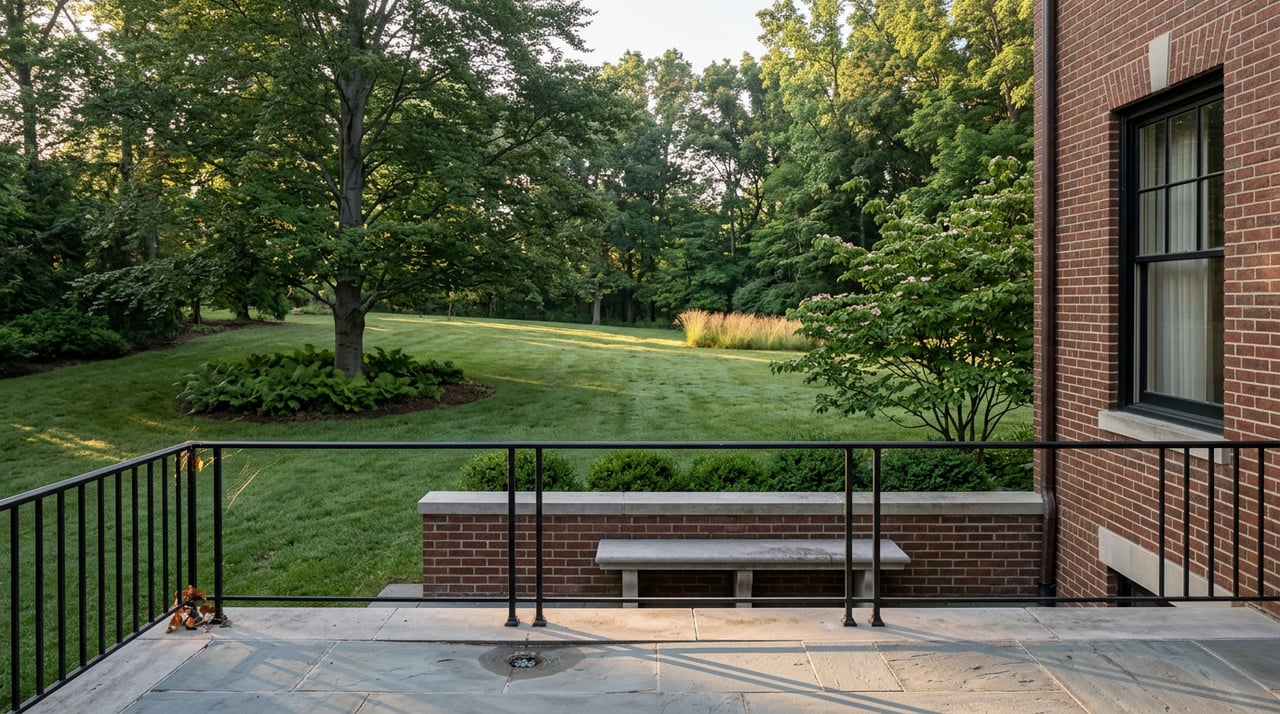
The Vale of Avoca runs south from Mount Pleasant Cemetery down to where Roxborough Drive meets Mount Pleasant Road, a stretch of roughly a kilometre and a half that Yellow Creek has been quietly eroding for decades. The Midtown Ravines Group, a coalition of residents' associations that has spent nine years lobbying for its repair, put the scale of the problem plainly this year: City Council has approved $1.5 million to fund a detailed master plan for the ravine, but the group's own back-of-envelope estimate for the actual construction, the retaining walls, the rerouted staircases, the erosion barriers along the creek, runs to $35 to $40 million. That gap is the story. The planning money came from the city. The group expects the rest to come from a mix of nearby developers, civic-minded donors, and residents themselves.
This isn't an abstraction for people who live near it. The North Rosedale Residents' Association, working alongside Councillor Dianne Saxe, has already coordinated tree and shrub plantings in Chorley Park and stewardship walks through the Vale of Avoca to catalogue which plants are native and which are choking it out. The city held two public information sessions in February, one on a Wednesday evening and one on a Saturday morning, specifically so both working residents and retirees could show up. Volunteer cleanup days have run across two weekends every April, with recent turnout as high as fifty residents clearing litter before the growing season. More stewardship days followed in late May and early June in David Balfour Park, coordinated with Toronto Nature Stewards.
None of this is glamorous work. It's a neighbourhood association hiring its own arborist, city councillors from two adjoining wards showing up to the same meetings, and a nine-year advocacy campaign finally getting a construction estimate instead of another study. That's how the ravine gets fixed here: not by waiting, but by organizing.
What the loop actually connects
Part of why residents care enough to do this themselves is that the ravine system isn't just scenery. It's infrastructure. The switchback trail out of Chorley Park drops walkers straight into the Evergreen Brick Works and from there onto the Lower Don and the 72-kilometre City Loop trail. Separately, the Moore Park, Park Drive, and Avoca ravines link up in a roughly 7-kilometre loop through Mount Pleasant Cemetery, connecting back to the Beltline Trail and the Yonge Street corridor to the west. Residents use this network the way other neighbourhoods use sidewalks: dog walkers, runners, and people commuting on foot between Rosedale and midtown all rely on the same paths that erosion has been slowly eating away.
That's the practical case for the money. A trail that connects half a dozen distinct communities, from Deer Park to Summerhill to Davisville, isn't a nice-to-have. It's the connective tissue that makes the ravine system function as a system instead of a scattering of disconnected parks.
Eighty years of a fair the city never had to run
The same instinct shows up a few blocks away, on a different kind of infrastructure. This past May, Rosedale Park hosted the 80th running of Mayfair, a two-day neighbourhood fair that started in 1946 and has never been organized by anyone but volunteers. Mooredale, the Rosedale-Moore Park Association that has run the event since its founding, brought rides, a Saturday parade, bingo, and midway games back to the park at 20 Scholfield Avenue for its milestone year. The fair also ran its usual Rosedale-versus-Moore Park food drive benefiting Second Harvest, with Summerhill Market sponsoring alongside other local businesses.
Eighty consecutive years without a corporate operator or a city parks department running the show is not a small thing. It's the same pattern as the ravine: a piece of neighbourhood life that keeps functioning because residents keep showing up to organize it, not because anyone outside the neighbourhood is paying for it.
What replaced the diner, and what still hasn't opened
The same pattern, oddly, shows up on the restaurant strip along Yonge Street too, just running at a slower and more personal pace.
For 45 years, the Rosedale Diner at 1164 Yonge Street was the kind of institution that outlasted trends by simply not chasing them: duck poutine, a patio regulars described as feeling tucked away like a secret, and an appearance on Diners, Drive-Ins and Dives that only added to a reputation the diner already had locally. Owners Dubi and Esti Filar closed it on December 31, 2023, retiring rather than selling to keep it running. One regular told CBC she'd been coming for forty years and had watched the Filars become genuine friends, not just the people behind the counter. The space didn't sit empty for long. Manita, a neighbourhood cafe and bar with a second location in the city, now occupies that same address, serving breakfast through dinner seven days a week under a sign that still says Rosedale on it.
A few doors up, at 1055 Yonge Street, a different kind of succession has been playing out in slow motion. Justin Friedlich spent nearly a decade as chef de cuisine at Buca Yorkville before announcing his departure in May 2023. Two years later, in May 2025, word broke that he was opening his first solo restaurant, Shay, named after his young daughter, in a space most recently occupied by a Freshii outlet, right next to the Quail and Firkin. Shay's own website said "coming summer 2026." As of a mid-July 2026 roundup of Toronto restaurant openings, the doors still weren't open, with the item filed under the kind of "set to open soon" language that's been attached to this address for well over a year now.
That gap between announcement and opening isn't a knock on the restaurant. It's a reminder of how this stretch of Yonge actually works. When something closes here, whether it's a 45-year diner or a fast-casual salad chain, what fills the space tends to be another independent operator taking their time to get it right, not a chain moving fast to capture foot traffic near Summerhill Station. Manita moved into the diner's old address without disrupting the block's rhythm. Shay is taking over a year to open because Friedlich, by every account, is building something meant to last as long as what came before it did.
The through-line
None of these three stories, the ravine, the fair, the restaurant row, are really about infrastructure or hospitality on their own. They're about who does the work of keeping a neighbourhood functioning day to day. In Rosedale, that work keeps landing on the same people: residents' associations that hire their own arborists, a volunteer group entering its ninth year of advocacy for a trail repair, a fair committee that has run the same event for 80 years without a corporate sponsor taking over, and a chef willing to wait more than a year to open the right restaurant in the right spot rather than the fast one.
That's not a story you'll find in a market report. It's the kind of thing you only notice if you're walking the same ravine loop every week, or if you've been checking the windows at 1055 Yonge for over a year wondering when the lights finally go on.
If you're thinking about what a neighbourhood like this means for your own next move, whether you already call Rosedale home or you're watching from a nearby pocket of the city, Penthouse Queen has spent years reading Toronto's most storied neighbourhoods this closely. Request private access to talk through what a property here, or anywhere in the city's trophy corridor, actually looks like up close.